In April, the second output of the POWER project, the “POWER Strategy & Guidelines for the Fair Portrayal of Women Athletes in Sports Media” document was published. It is available in English, Bulgarian, Greek, Hungarian, Italian, Portuguese and Spanish here.
The strategy-development was led by the Spanish POWER partner, the Union of Catalan Sports Federations (UFEC).
UFEC Project Manager Alla Krinitsyna gave some insights to why building a strategy and guidelines was important for the POWER partnership.
“It was important for the POWER project to develop a Strategy and Guidelines because, despite growing public attention to women’s sport, there is still a significant lack of practical, research-based materials that help media professionals ensure fair and balanced representation of women athletes. Across Europe, women in sport continue to face underrepresentation, stereotypical narratives, and unequal visibility in sports media.
“The POWER project responded to this challenge by creating evidence-based tools that translate research findings into concrete recommendations and actions. The Strategy and Guidelines aim to support journalists, communication professionals, sports organisations, and content creators in promoting more inclusive, respectful, and non-stereotypical portrayals of women athletes. In a context where media strongly influences public perception, sponsorship opportunities, and participation in sport, these materials are highly relevant and necessary to contribute to long-term gender equality in sport and media across Europe.”
Explaining the strategy-development process, Alla Krinitsyna added:
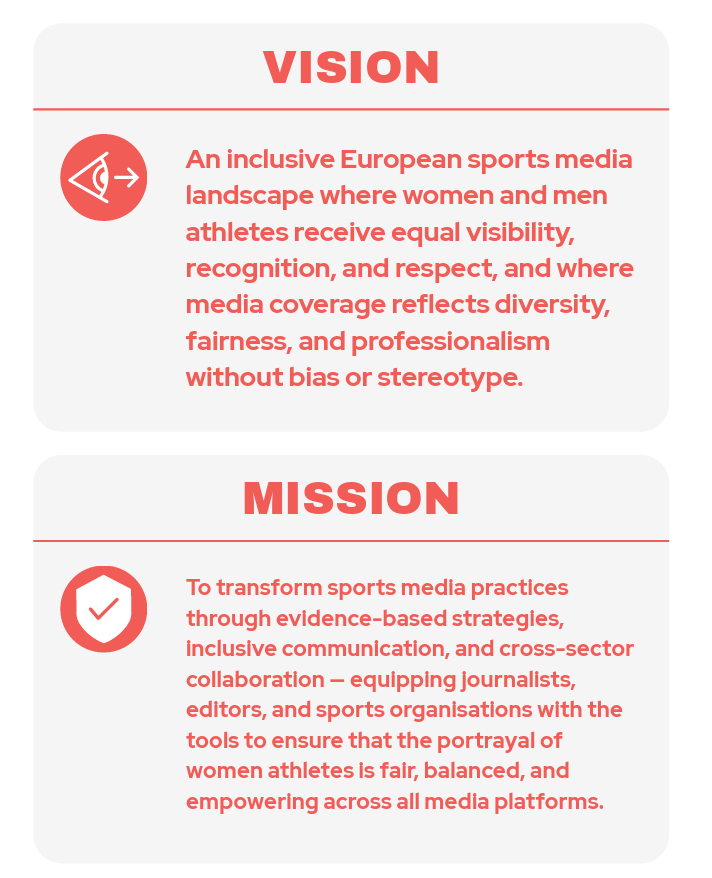
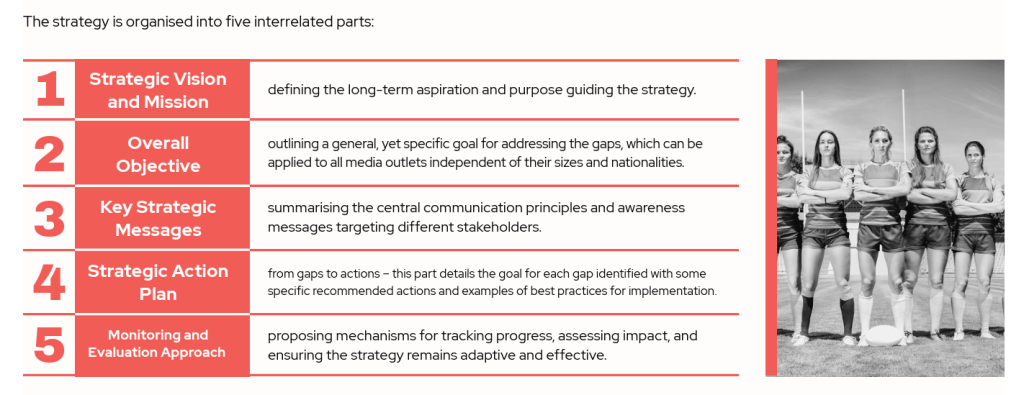
“It was a structured and research-based process. First, the consortium analysed the findings from the project’s research phase, which identified five key gaps in the portrayal of women athletes in sports media, including visibility, narrative diversity, visual representation, structural imbalance and governance. These gaps were then transformed into five strategic goals within the POWER Strategy, defining the key changes that the sports and media sectors should pursue to achieve fairer representation of women in sport.
“Secondly, in order to understand how these goals could be effectively achieved, the partnership carried out a large-scale mapping and analysis of more than 50 national, European, and international resources, including guidelines, policies, media frameworks, and best practice documents related to gender equality and sports communication. Through a collaborative evaluation process, the consortium identified the most relevant and practical approaches that could inspire concrete actions and recommendations for the POWER outputs.
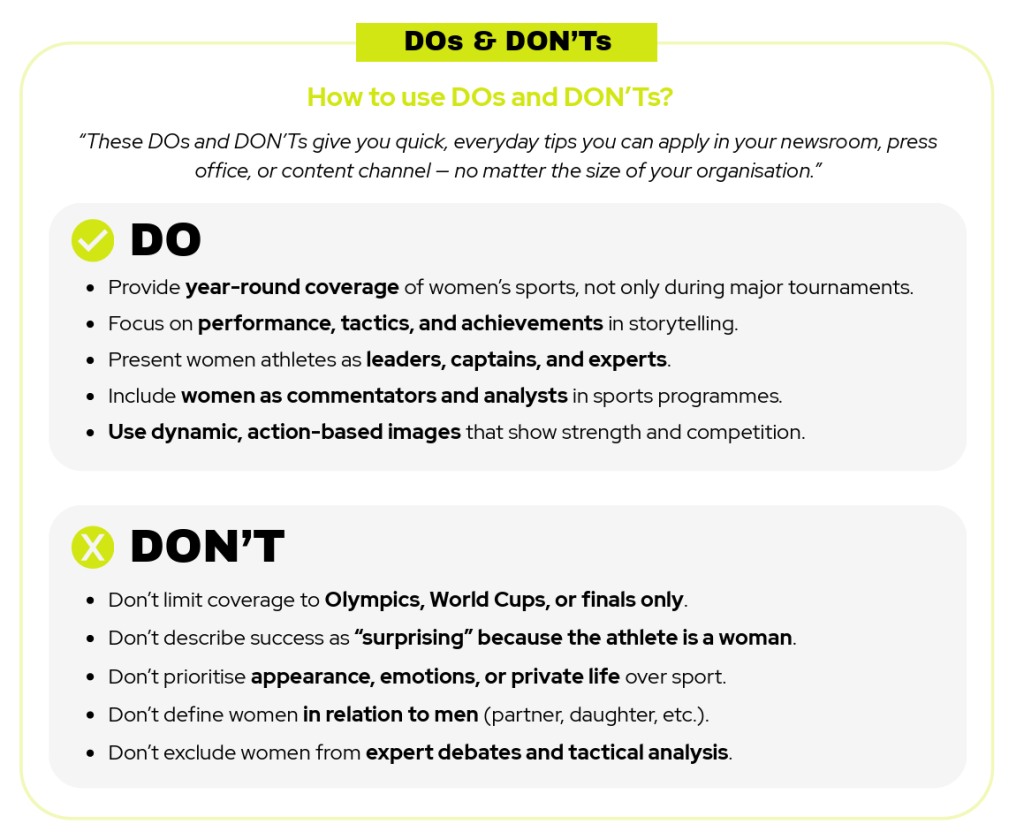
“Based on this work, the POWER Guidelines were developed as a practical tool for media professionals, sports organisations, journalists and content creators. The Guidelines present the key gaps identified by the research, together with concrete “Do’s and Don’ts”, recommendations, and examples of good practices adapted to the national contexts of all partner countries. Together, the POWER Strategy and Guidelines represent a strong combination of methodology, evidence-based recommendations, practical guidance, and inspirational practices aimed at supporting long-term change in sports media across Europe,” she explained.
Reflecting on the challenges during this process, Alla Krinitsyna said:
“One of the biggest challenges was ensuring that the final documents would not become simple “copy-paste” compilations of existing materials. It was particularly important for the consortium to build the Strategy and Guidelines on the findings of the project’s research phase, ensuring that all recommendations directly responded to the real gaps, trends and challenges identified in sports media across partner countries.
“The consortium wanted to go beyond collecting recommendations and instead critically analyse existing tools, identify the most relevant and up-to-date practices, and transform them into practical, accessible guidance adapted to today’s media realities. Another important challenge was ensuring that the materials would be useful for different national contexts while still maintaining a coherent European vision and methodology. These challenges were overcome through strong collaborative work within the consortium. Partners carried out cross-cutting analyses of more than 50 international, European, and national resources, exchanged perspectives from different countries, and consulted external experts in gender equality, media and sport communication. This process allowed the consortium to validate ideas, identify the most effective approaches, and ensure that the final recommendations were both evidence-based and practical for real-life application.
“A further challenge was the visual presentation of the Strategy and Guidelines. The consortium wanted the documents to be dynamic, attractive, and easy to read, rather than overly academic or institutional. To achieve this, the partnership analysed examples of good practice design documents and worked closely with a professional designer, combining creative ideas with a step-by-step review and validation process. In the end, collaborative work, expert involvement, strong coordination, and careful planning became the key success factors that allowed the consortium to produce high-quality and impactful materials.”
When talking about the expectations towards the Strategy and Guidelines and their contribute to the success of POWER, Alla Krinitsyna added:
“The main expectation towards the POWER Strategy and Guidelines is that they become practical and inspiring tools that help transform how women athletes are portrayed in sports media across Europe. Rather than remaining theoretical documents, they are designed to support journalists, media professionals, sports organisations, communication departments, students and content creators with concrete recommendations, examples, and actions that can be applied in everyday professional practice. The consortium also expects the materials to contribute to greater awareness of gender bias in sports media and to encourage more balanced, respectful, and diverse representation of women athletes.
“These outputs are central to the success of the POWER project because they ensure its sustainability and long-term impact. They provide a shared European framework while remaining adaptable to different cultural and media contexts, helping stakeholders across Europe work towards the same objective: increasing the visibility, quality, and fairness of women athletes’ representation in sports media,” she concluded.
The POWER Strategy and Guidelines document is available here in English, Bulgarian, Greek, Hungarian, Italian, Portuguese and Spanish.